Archive for the ‘Money & Finance’ Category

Day 22: The Poor and the Sick

Tuesday, August 28th, 2007

Is there such a thing as being sick on a budget? Our family seems to think so! We try to even address our budget when it comes to our illnesses in life. Here are some ways that you can save money when you are sick:

– Try home remedies before reaching for the cough syrup. There are tons of wonderful remedies that you can do that don’t require a big expense. I am a big believer in chicken soup, a warm bath, hot tea, and lots of rest. The rest alone is sometimes enough for me to kick what is ailing me.

– If you need over-the-counter medications, try and stock up on these items when doing your drugstore rebates. Usually CVS & Walgreens both will run rebates on these medications and you can get them for free or really inexpensively. Other great resources are the Dollar General, the Dollar Tree, and the generic equivalents available at your large superstores. The best way to save a buck is to have your medicine cabinet stocked with these items before you are ill. A 24 hour drugstore with no sale will run you quite a bit more than what you would spend normally.

– Organize your medicine cabinet so you know exactly where your items are. We have a three drawer plastic container where we have our medications divided by ailment (cough/cold, pain relievers, stomach) and we put these in there. I get really mad at myself when I have run out to get a medication, only to find it days later in a hidden drawer. Keeping this and your First Aid kit organized are the best ways to know what you have on hand when sickness and emergency situations arise.

– When you go to the doctor, ask if they have any samples of the medications you might need. Sometimes, particularly with my children, I am able to get enough for a few days.

– If they don’t have any samples, ask if there are any prescriptions that they could give you off of the $4 list or free antibiotics from your local retailers. Call around and price check before you fill your prescriptions and always ask if you can get the generic version of any medication.

– If you start to feel ill, try right away to get in the doctor for treatment. A visit during normal office hours will be a lot less expensive than an urgent care clinic.

– When choosing a doctor, ask about evening hours and Saturday appointments. Pick a doctor with extended hours and this alone can save you quite a bit. I love that our doctor’s office is open until eight in the evening and that I have many more options for appointment times.

– If you do become ill, try after-hours clinics or places like MedPoint to get the care that you need (unless the illness is life-threatening). I have saved our family a lot of money by visiting these places instead of the emergency room. Just walking into the emergency room can put me in the negative, before I have even been checked, so these after-hour clinics can be a wonderful option for the frugal family.

– If your illness does require a hospital stay, make sure to check your bills. There are many expensive and unnecessary charges that can be added to your bill. This is one of those types where diligence will be your best defense in lowering your hospital bill. Don’t be afraid to ask what the charges are and have them explain the vague & general charges. You don’t have to be rude, but you can be very firm and polite when asking someone to explain what a “lab fee” is for. You are your own best advocate when you are educated about what you are paying for.

– Don’t forget to set up your emergency account for these types of situations. Check into getting a flexible spending account for your medical expenses. Consumer Reports offers this advice…”If your company offers a flexible spending account for your out-of-pocket health-care costs, go for it–but don’t go overboard.” Flexible spending accounts are usually use-it-or-lose it accounts. Figure out a rough estimate and go a little under that. Don’t know what to do with all that leftover money at the end of the year? Check out these 24 suggestions for spending your leftover flexible account money.

– The best way to stop yourself from getting sick is prevention. Exercise, take a daily multivitamin, and make healthy lifestyle choices. People who do these things save tons of money on doctor visits and medications. If that isn’t a powerful motivator, I don’t know what is!

Potential Monthly Savings: $20 or more

Sound Off: What are some ways you save money when your family is sick?

Day 21: Create Your Own Secret Emergency Account

Monday, August 27th, 2007

I use the “secret accounts” phrase completely tongue-in-cheek. I decided one day to set up an emergency account and told my husband about it, but he apparently wasn’t listening to me. One day I showed him how much we had saved and he asked when I went off and got a secret account. Ever since then it has become a big joke between the two of us and when we get extra money, he always asks if I plan to store this in my secret account.

In all seriousness, creating an extra account for the extras in life can be an important way to save yourself some money. The money gurus encourage you to set up funds in other accounts that you can easily have access to and to prepare for those big things in life. Check out books from Dave Ramsey, Mary Hunt, or Suze Orman for great ideas on establishing your own emergency funds.

For example, start keeping track of all of the receipts on home improvements you have made during the year. At the end of the year, tally up how much you spent and divide the number by 12. That would be your goal to set aside for the next year for home repairs. This will save you interest and fees that you would incur from putting these expenses on a credit card. This same scenario can be applied to auto repair, Christmas gifts, medical expenses, taxes, etc… These “emergency” situations come up when we least expect them and it is nice to have that money socked away for those rainy days. Sometimes we know these situations will arise (a family vacation or Christmas) and we end up putting them on our credit card even though their arrival was looming all year long.

This month alone we had the car in the shop twice and, of course, both times these visits were unexpected. Thank goodness for that super “secret” account that we set up.

If you aren’t a good saver, have the bank set it up to be automatically taken out. Even if you can only afford to take $25 out of your account each month, that is $25 that you can use when an emergency arises.

If you are more disciplined, you can use the snowball technique towards your savings, provided your debts are all paid down. If you pay your credit card or car loan off, for example, start paying yourself that same amount and moving those funds into your emergency account. You won’t feel the ouch factor if you were already taking that money out anyway.

These accounts can be great for the bad things in life, but they can also be wonderful for the good things in life. We have a vacation account set up and I am hoping that we can go somewhere really special for our ten year anniversary. We have the money automatically taken out and moved into our vacation fund each month.

Here are some more great articles on creating emergency funds:

Bankrate’s Simple Formula for an Emergency Fund
How to Create an Emergency Fund Now
About.com Emergency Fund Guide
6 Ways an Emergency Fund Can Help Your Budget
The Emergency Fund

Potential Monthly Savings:
$30 or more

Sound Off: Do you have an emergency fund? How did you determine your budget for this account?

Homeschooling on a Budget

Monday, August 27th, 2007

Jenn, over at Frugal Upstate, has an excellent post today on how to homeschool on a budget. Guest blogger, Alexandra, from Happy Hearts at Home, gives the scoop on homeschooling. She lists tons of free resources and curriculum that you can use for your children.

This has been something that has been on my heart recently. I am really torn about what I should do with my son. Next year he will begin school and we have a few options in our area. I am not completely sold on any of the options though. Elementary schools seem fine, but middle schools and the high schools are scaring me. Private schools are not in our budget, but am I organized enough to take on an endeavor like homeschooling my child? Am I even smart enough to do something like that? Are there other people in the community who are attempting it?

What advice can you homeschooling moms give to someone who is just starting out? Why do you do it? What have you gained from it? What is the downside? Any books you can recommend?

Please share!

Day 20: Curb Your Weekend Spending

Saturday, August 25th, 2007


I have noticed something about myself that I don’t really like. It seems that when I get bored on Saturdays, the first thing that I want to do is go shopping. I am a smart shopper and I try to only shop at the thrift store, but many times I don’t really need anything… I am just looking for a quiet escape for myself.

I have really been thinking about this a lot and am trying to find new ways to fill the boredom that makes me want to shop. To be honest, if I limited my shopping to the times where I had both the children, my shopping would be nonexistent or very short & sweet. Neither of my children enjoy shopping so I don’t find shopping to be all that enjoyable for me.

There are so many other things that I could be doing and I loved the idea of a Money-Free Weekend, which has been featured several times on The Simple Dollar.

Today I decided to stay home and get some things done around here. I was able to do a little reading, accomplish some stuff for the website, mow the lawn, make a really nice dinner, bake some muffins, and pay the bills. Continuing in this theme, this evening my husband and I are having a date night and watching “The Godfather” (taped from television) and playing a board game.

Here are some ideas for things you could do instead of spending money over the weekend:

1. Mow the lawn
2. Play board games with your family.
3. Mix up some dinner in a bag.
4. Menu plan & make your grocery list for the week.
5. Watch a free movie and pop some popcorn.
6. Tackle a project.
7. Try a free hobby.
8. Organize your pantry and make a meal out of those ingredients for dinner.
9. Clip and organize your coupons.
10. Do your laundry.
11. Soak your feet.
12. Read a good book.
13. Go to a free museum day or event in your community.
14. Make some cool toys and activities for your kids.
15. Start a garden.
16. Write a letter.
17. Make yourself a special coffee treat.
18. Do some baking.
19. Bake some bread.
20. Steam your carpets.
21. Create a routine that you can live with.
22. Make croutons.
23. Make some fun things for the tub.
24. Gather up the broken crayons and make some better ones.
25. Paint a mug with your children.
26. Decorate your child’s room with things you already have.
27. Make something out of the ingredients you have in your freezer.
28. Create some new & free family traditions.
29. Clean out the fridge.
30. Take a walk together.
31. Clean your grill.
32. Make a set of cleaners for each level of your home.
33. Take the week’s advertisements and start making your price book (you can use our free sheet).
34. Go as a family to the library and then read the books with your child.
35. Clean out your closet.
36. Organize your laundry room.
37. Make a baby (Note: This child will not be free, but making your baby can be!)
38. Share a meal with someone else.
39. Baby proof your house.
40. Make some powdered milk for the week.
41. Cut your family’s hair.
42. Make an emergency kit.
43. Start a blog.
44. Think about and repurpose an item in your home.
45. Make some frozen banana popsicles.
46. Do something dangerous with your children.
47. Make your office more child-friendly.
48. Organize your car.
49. Have a great conversation with your spouse.
50. Start planni
ng for your frugal Christmas.
51. Make some foamy soap.
52. Exercise to some library videos.
53. Make some yummy waffles for a Sunday brunch.
54. Make milkshakes and play in the sun with the kids.
55. Organize a yard sale.
56. Pray.
57. Start a gratitude journal or focus board.
58. Make some seasoning mixes.
59. Care for someone who is sick or the family of a sick loved one.
60. Find things around your house to organize your belongings.

Potential Savings:
$25 or more

Sound Off: What is your favorite free weekend activity

Day 19: Don’t Buy Stuff You Can’t Afford

Friday, August 24th, 2007

Potential Savings: Immeasurable!

Freebie Friday: August 24, 2007

Friday, August 24th, 2007

We are experiencing some technical difficulties on our site. The forum is down, but we are hoping to resolve the problems soon. We had no power all evening yesterday so I am running a little behind on emails and such. Thank you so much for your patience!

Health & Beauty:
Get a free sample of Nature’s Made Fish Oil.
Try a free sample of Dove Hair Care.
Sign up for a free pregnancy planner.
Get a free “Earn Your Stripes” Bracelet. Type in code B3 Your B3st
Try on a pair of Nine West Jeans at select Macy’s Department Store, receive a free corduroy cap.

Food:
Sam’s Club Members can try a sample of Lipton to Go Tea.
Try a free sample of Curves Cereal.
Get a free Kashi Snack.
Register to receive a free Chickfila Sandwich & Medium Soda.
Today is free Fry-Day at Hardees. No purchase necessary.
Call for a free sample of Baronet One Cup Coffee Pods.
Download a coupon for buy one get one free on Vanilla Coke.

Home & Garden:
Try a free sample of Purex Laundry Detergent.
Sign up for a free sample of Post-Its Education Notes

Entertainment:

Get tickets to meet Barbie.
Claim a complimentary subscription to Road & Track Magazine (say no to the offers!)
Claim a complimentary subscription to Horse Illustrated Magazine (say no to the offers!)
Join the White Soxs Kids Club and get two free White Sox tickets (sign up for the free membership).
Get a free subscription to Dime Magazine.

Pet Care:

Try a free sample of Nature’s Select Dog Food.

Other:

Teachers can register for a free Hand Pointer.

Note:
I found this article on utilizing the Google Toolbar to automatically fill in freebie forms for you. I haven’t tried it- if anyone has, let me know what you think! Anything to make this process quicker sounds good to me!

Day 18: Get Yourself Organized

Thursday, August 23rd, 2007

Today I want to talk a little bit about organization and why it will save you money. You will find that many blogs and sites that focus on money-saving ideas also share ideas on organizing. It seems that saving money and staying organized go hand in hand.

Being organized does not come naturally to me and it is something that I am constantly working at to achieve. I know for some this comes easily, but I am not one of those people. If you came to my house right now, you might be surprised at the disorganization and projects that are looming around here. It is a constant battle for me especially now that I am a mom.

I desire to be organized though for many reasons, including financial ones, and that is why I continually try to work at this.

Reasons to Get Organized:

– If you are organized, you will have a good idea of the inventory that is already in your home. You will know exactly where everything is and you will know how many of that item you already have. Instead of running out to buy toothpaste, for example, you will know where you keep the extra toothpaste and will be able to use this instead. This will save you from buying repeat items and it will save you from spending extra money that you don’t have.

– If you are organized, you make lists for yourself. A good grocery list, for example, will save you money because you will know exactly what you need and you will buy only that. People who come to the grocery store with no list end up making multiple trips to the store (wasting gas money) and buy items that they don’t need.

– If you are organized, you save money on food. Menu planning and proper planning of meals (the night before) helps to prevent visits to those fast food restaurants. Plan meals that are easy to make and try to have back-up plans for nights where you don’t feel like cooking. It might be something as simple as a frozen pizza, but having something to eat at home will save you from wasting valuable money at McDonald’s.

– If you are organized, you keep a calendar of events. Why does a calendar save you money? Well, you know when your appointments are and you don’t miss them. Missing appointments can cost you money for not showing up to your doctor or dentist office. They also offer valuable reminders for when bills are due so you don’t have to pay late fees. You also are a star because you remember anniversaries, birthdays, and are a person that people can rely on.

– If you are organized, the things you have last longer. You make the time to care for the items you have in your house and you remember to schedule maintenance for your automobiles and the appliances/services needed in your home. This will save you money because you won’t need to replace things in your house as frequently and things will generally run smoother for you.

There are plenty more reasons to be organized, but I wanted to focus mainly on the financial benefits since we are talking about ways to save this month.

Here are some of the resources and books for getting yourself organized

Sites to Organize Thyself:

MomAdvice Organizing Section
Organizing Topics on Our Blog
FlyLady
Organized Home
Organized Christmas
Cozi
Real Simple
Martha Stewart
I’m An Organizing Junkie
The Lazy Organizer
Organising Queen
Neat & Simple Living

Books to Organize Thyself:

Sink Reflections by Marla Cilley
Sidetracked Home Executives by Pam Young
Homekeeping Handbook by Martha Stewart
It’s All Too Much by Peter Walsh
Scaling Down by Judi Culbertson, Marj Decker, & George Booth

Potential Savings: $30 or more

Sound Off: What is one way you stay organized?

Day 17: Find an Inexpensive Hobby

Wednesday, August 22nd, 2007

In my basement are bins and bins of beautiful art supplies and oodles of crafty fun. I could spend years making things out of the items that I have already bought…and yet when I go to the craft store, I still feel that familiar tug that I really need more. I love to explore different hobbies and I love to craft. The fact that I am no good at crafting doesn’t seem to stop me and maybe you are in the same boat? Have you ever really thought about the amount of money you are spending on your hobbies? Have you ever thought about how most of the really popular hobbies cost lots of money to accomplish? Do you have oodles of craft supplies and still have an urge to buy more?

Hobbies are great for a number of reasons and I think they are important to be shared in this series. For one, if you have a hobby it can be a wonderful diversion from shopping and spending money. Hobbies can cost money, but you can choose to embrace hobbies and use your talents creating things that don’t cost much. Although some people might consider shopping a hobby, it shouldn’t be and finding things that fill your life in a positive way can have a positive impact on your wallet.

Not only do hobbies keep you away from shopping, your hobbies can also be turned into profits for your family. If you become good at one of your hobbies, you could potentially earn money with the talents that you have. For example, I love to create hair accessories for my daughter and my friend’s love the accessories that I have made for her. I wasn’t really intending to go crazy selling them, but my interest in making things for her created a small amount of revenue for me.

I can also use my hobbies to help us save our family money. Instead of buying a wreath for our front door, for example, I can make my own out of things in our home or by buying a small amount of greenery from a craft store. Learning to make things that you would buy can help your finances a lot!

Hobbies also have been proven to help people medically. People who are chronically stressed have poor health, while regular relaxation can promote good health. If I relax and really enjoy something in life, I can prevent things like high blood pressure, digestion problems, ulcers, heart disease, and insomnia. Having a relaxed attitude and enjoying the little things in life lead to better health and fewer doctor visits. Who could argue with that?

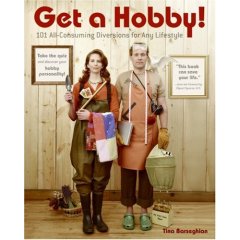
Hobbies don’t have to be expensive and many hobbies, in fact, don’t even cost a dime. I found a great book on exploring hobbies called (no less!), “Get a Hobby.” In it are tons of great ideas for hobbies that cost little to nothing and can keep you busy for months on end.

Here are some hobbies that you can pursue that shouldn’t cost you a lot of money and will help to keep you out of those craft stores:

Genealogy– Much of your research can come from things that you already have or from items in your relative’s possessions. Try to gather as much information as you can from your family members (names, birthdates, marriages, deaths, significant life events, etc…) and explore this information first. Next, look through old cookbooks, photo albums, newspaper clippings, resumes, scrapbooks, and yearbooks for more family information. You can then begin looking to websites like Genealogy.com or the Family History Library of the Church of Jesus Christ of Latter-Day Saints. Utilize this information to make a family tree.

Tina Barseghian, the author of “Get a Hobby” also suggests creating a living history interview with people in your family. Record them on camera or with a tape recorder and ask them questions about the family and about themselves. (Note: I am going to be exploring this more through another avenue of recording your life history and I can’t wait to share it with you all!)

Journaling & Blogging– To be honest, I have never really thought of my blog as a hobby, but I guess this would be one of the best hobbies I have ever taken on! Blogging and journaling are wonderful ways to preserve memories, to share your life story, or to talk about things you are passionate about.

After I went to a viewing of “The Secret” I began keeping a gratitude journal. For me, this has helped to remind me of all that I have and I also try to do this when I feel the impulse to shop. This has been very therapeutic for me and I feel like it has had a positive affect on my attitude too.

I try to keep all different types of journals that I look forward to sharing with my children. We have a journal of all the funny things that they have said, a Christmas journal, my gratitude journal, and then I do my blogging about things that we do around the house.

You can find beautiful journals at the dollar stores and for one dollar you can begin focusing on all of the wonderful things you have in life.

You can start a free blog through Blogger, My Space, or LiveJournal (just to name a few!)

These are just two examples of great hobbies that you could start today. There are tons others like gardening, cooking, sewing needlework, rubber stamping, decoupaging, or calligraphy.

If you need crafty inspiration, visit the Martha Stewart site and behold her crafting glory! I love to just hunt through the archives and see cool ideas that I can do in my house, that don’t require a lot of money.

I also spend lots of time at our local library hunting through books on crafts that I would like to explore. Many times just reading about the crafts gives me a feel for whether or not I would like to try something, without making the time or money investment into the craft itself.

If you want to learn how to tackle new hobbies, check the big hardware stores (Home Depot or Lowes) for free classes that they offer. Many craft stores also offer free or very inexpensive classes, where you can try a hobby out.

Just remember when going into a hobby, that you really want a hobby that will not require a huge financial investment. If it will require an investment, tell family and friends what items you will need to accomplish the hobby or ask for a gift card to the store to buy the items. One yea
r, I used my gift card to take a cake decorating course at our craft store. The time invested has helped me greatly and saved us lots of money on birthday cakes.

Potential Monthly Savings: $20 or more

Sound Off: What are your favorite hobbies? How do you save money when it comes to buying the supplies needed to do these?

Day 16: Bulk It Up

Tuesday, August 21st, 2007

For our Month of Savings, I want to share with you the benefits of using a wholesale club membership. Whether you are a family of two or a family of seven, there are many benefits to being part of a wholesale club.

First, if you haven’t read my small book on wholesale club shopping, I would highly recommend this article. It does a good price comparison of what the clubs offer and the cost for your membership. I did this a couple of years ago and it is still one of our most popular articles.

In our area, the only wholesale club that we have is Sam’s Club. When we lived in other states, we have had two or more choices, but this is the only choice now for us. Therefore, I can only really provide experience with this wholesale club, but all of them are excellent and have their own great benefits.

When I first began using my wholesale club membership, I just bought in bulk. I really didn’t think about prices and I just assumed that buying bigger meant that I was getting a better deal. I know I have come a long way since that time, but I am still learning every day.

Here are some of my tips for good deals in the wholesale clubs:

1. Make sure to carry a price book with you and take the time to really crunch the numbers before you make your purchases. We have a free price book sheet that you can print off on our website!

On my first visit with my price book, I simply wrote down the quantities and prices of the items that I buy most often. I brought all of my research home with me and then plugged it into my calculator. I was able to really sit down and see who had the best deals.

If you have choices for wholesale clubs, see if you can go to all of them (with a friend who is a member or check into one day passes at the stores) and compare prices between the items that you buy most frequently. Some of these stores have their pricing available online too so check out their websites for additional pricing information. Choose the club that is going to give you the most bang for your buck.

2. Don’t overlook the extra perks of your wholesale club membership. These clubs offer great savings on optical wear, prescription drugs, photo services and other insurance benefits. Check each website to see what benefits you can take advantage of and don’t forget to flash that card- you might be surprised where you can get some discounts (like here or here).

3. If you don’t think you will be using your membership that often, try sharing the membership fee with a good friend or family member. Schedule your shopping day together and split the cost of the membership.

4. If you have a Sam’s Club, look into their Click N Pull shopping option. This is the best thing in the world for impulse shoppers and for moms with screaming children who hate shopping (like myself!) I use this feature almost every single time we go because it saves me lots of time and money. You can read my personal and in-depth review here on how this feature works.

5. Gas prices can be much lower at the wholesale clubs than your gas stations. Make sure to understand what types of payments are required before you go to the pump though. Costco, for example, will not accept cash at their pump.

I also received a great reader tip today that just so happened to fit our theme today!

Amy,

Our family loves shopping at Costco and we wind up there at least once a week to buy salad, milk, and fruit.
I send my digital pictures there to be printed at .19 cents per picture in only an hour. You can add borders and special effects at no extra cost!
We also chose to buy their Executive Membership for $100 per year. This is the way to go if you spend a lot of $$ there each year. We get our clothes for the kids, gifts for family, and large food buying done there so it works well for us. If you have the Executive membership you get a cash back reward each year that you can use to pay for the membership. We got a check back for $89 so we only paid $11 for our normally $100 membership!!!!
Thanks again for all of your ideas!
Maria

Consumer Reports also offers these great tips for smart wholesale club shopping:

  • Make a list and stick to it.
  • Know how to identify super-bargains. At Costco, “.97” at the end of a price generally indicates discontinued or slow-moving products. At Sam’s, a “C” at the end of the item number denotes a canceled item.
  • Compare the club’s unit prices to those at your supermarket for heavily discounted staples. Supermarkets might be less expensive.
  • For big-ticket items, compare the club price to that of other retailers by going to sites such as PriceGrabber.com or BizRate.
  • Consider splitting large buys with friends. Otherwise, don’t buy in bulk perishables or medications with a short shelf life (check the expiration dates). You’ll end up tossing a lot away.
  • Try unfamiliar products judiciously. You don’t want to get stuck with, say, a gallon of Brand X Vidalia onion salad dressing.
  • Pay with cash; it’s a reality check on how much you’re spending.
  • Shop on weekdays, preferably when the store opens or in midafternoon. That’s when crowds tend to be lighter.
  • Not sure about joining? In many states you can request a day pass at Sam’s Club and pay a surcharge, typically 10 percent over what members pay. Costco used to have a similar program, but discontinued it. Now, only members can purchase there.

Finally, I have been able to pay for my wholesale club membership by just the savings I have received from my baking supplies. You can read all about my adventures in making bread and my discoveries on their cheap baking supplies.

Potential Monthly Savings: $30 or more

Sound Off: Do you have a wholesale club membership? What do you ALWAYS try to buy when you are at your wholesale club?

Day 15: Keep Your Bills in Check

Monday, August 20th, 2007

We are halfway through our Month of Savings and I am learning so much! I am loving the comments to these entries!

One of the main reasons that I am able to continue staying home with my kids is because I am fairly strict when it comes to money management. I try to keep track of everything that is going in and coming out by utilizing the Quicken Software and I also hand write items that I want to keep track of on those important bills (credit card, student loans, auto loan payments).

As I had discussed before, our cash system has also enabled us to stay on track financially. I try to use cash whenever I can, not only because I feel the impact of losing cash more, but also because I want our children to see us using our cash and not the debit card all of time. It really benefits the entire family if I can use cash versus the debit card so that is what I try to use, in most situations.

Another thing that I began doing several years ago is to compare and check rates on all of my bills that I can (at least) yearly. Interest rates are always changing and companies are continually offering new and better plans out there, so I make a date in my calendar to check our bills each year. You can set this up any day that you like, but I try to do this on January 1st since we are already starting a new year and a fresh start with our financial goals.

I have always used Lower My Bills to compare rates (Note: We are not affiliated with this company, but I have great success with them!) on all of our bills. They offer rate comparisons on mortgages, cell phone plans, long distance plans, internet, credit cards and insurance quotes.

You can type in your information and it will spit out quotes and comparisons on different plans that they offer in your area. Another bonus that I have found is that they also offer customer reviews of different companies. It is great to read these before signing on with any company since customer experience is usually a good indicator of the type of service that they offer.

We accumulated some debt while my husband was unemployed and had to put our move on our credit card. I believe that it cost about $8,000 to move to this area and my husband’s employer, at that time, would only help us with a few hundred dollars of this bill.

When the first bill came, I realized how foolish it was to have put it on there, but at the time we didn’t feel we had a lot of choices in the matter. I began to search on Lower My Bills to see if I could find a lower interest rate. While I don’t encourage card-hopping, I did think it was important to see if the rates out there were lower so that we could transfer the balance and pay it back quicker.

We found a credit card offer with a fixed balance transfer rate of 3.99%. Of course, adding any new debt to the card did have a higher percentage rate, but we had no intentions of adding to that debt so we transferred all of the balances of our cards (one with student loans and the other with our moving expenses) over to one card. We have not added to our debt and are down to less than $2K left to go.

It is great if you can check your rates yearly or when your contracts expire with companies. Don’t be afraid to ask the companies you are currently with, when your contract is expiring, if you can be put on the new plans that they offer to their customers. Many times the company will want to keep your business and will be willing to work with you!

Potential Monthly Savings: $50 or more

Sound Off: What are some ways that you keep your bills in check? Do you use software or just the good old pen and paper?