Potential Savings: Immeasurable!
Archive for the ‘Saving’ Category
Day 19: Don’t Buy Stuff You Can’t Afford
Friday, August 24th, 2007Day 17: Find an Inexpensive Hobby
Wednesday, August 22nd, 2007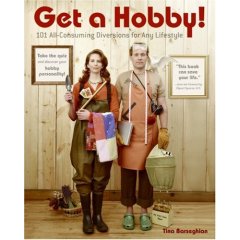 In my basement are bins and bins of beautiful art supplies and oodles of crafty fun. I could spend years making things out of the items that I have already bought…and yet when I go to the craft store, I still feel that familiar tug that I really need more. I love to explore different hobbies and I love to craft. The fact that I am no good at crafting doesn’t seem to stop me and maybe you are in the same boat? Have you ever really thought about the amount of money you are spending on your hobbies? Have you ever thought about how most of the really popular hobbies cost lots of money to accomplish? Do you have oodles of craft supplies and still have an urge to buy more?
Hobbies are great for a number of reasons and I think they are important to be shared in this series. For one, if you have a hobby it can be a wonderful diversion from shopping and spending money. Hobbies can cost money, but you can choose to embrace hobbies and use your talents creating things that don’t cost much. Although some people might consider shopping a hobby, it shouldn’t be and finding things that fill your life in a positive way can have a positive impact on your wallet.
Not only do hobbies keep you away from shopping, your hobbies can also be turned into profits for your family. If you become good at one of your hobbies, you could potentially earn money with the talents that you have. For example, I love to create hair accessories for my daughter and my friend’s love the accessories that I have made for her. I wasn’t really intending to go crazy selling them, but my interest in making things for her created a small amount of revenue for me.
I can also use my hobbies to help us save our family money. Instead of buying a wreath for our front door, for example, I can make my own out of things in our home or by buying a small amount of greenery from a craft store. Learning to make things that you would buy can help your finances a lot!
Hobbies also have been proven to help people medically. People who are chronically stressed have poor health, while regular relaxation can promote good health. If I relax and really enjoy something in life, I can prevent things like high blood pressure, digestion problems, ulcers, heart disease, and insomnia. Having a relaxed attitude and enjoying the little things in life lead to better health and fewer doctor visits. Who could argue with that?
Hobbies don’t have to be expensive and many hobbies, in fact, don’t even cost a dime. I found a great book on exploring hobbies called (no less!), “Get a Hobby.” In it are tons of great ideas for hobbies that cost little to nothing and can keep you busy for months on end.
Here are some hobbies that you can pursue that shouldn’t cost you a lot of money and will help to keep you out of those craft stores:
Genealogy– Much of your research can come from things that you already have or from items in your relative’s possessions. Try to gather as much information as you can from your family members (names, birthdates, marriages, deaths, significant life events, etc…) and explore this information first. Next, look through old cookbooks, photo albums, newspaper clippings, resumes, scrapbooks, and yearbooks for more family information. You can then begin looking to websites like Genealogy.com or the Family History Library of the Church of Jesus Christ of Latter-Day Saints. Utilize this information to make a family tree.
Tina Barseghian, the author of “Get a Hobby” also suggests creating a living history interview with people in your family. Record them on camera or with a tape recorder and ask them questions about the family and about themselves. (Note: I am going to be exploring this more through another avenue of recording your life history and I can’t wait to share it with you all!)
Journaling & Blogging– To be honest, I have never really thought of my blog as a hobby, but I guess this would be one of the best hobbies I have ever taken on! Blogging and journaling are wonderful ways to preserve memories, to share your life story, or to talk about things you are passionate about.
After I went to a viewing of “The Secret” I began keeping a gratitude journal. For me, this has helped to remind me of all that I have and I also try to do this when I feel the impulse to shop. This has been very therapeutic for me and I feel like it has had a positive affect on my attitude too.
I try to keep all different types of journals that I look forward to sharing with my children. We have a journal of all the funny things that they have said, a Christmas journal, my gratitude journal, and then I do my blogging about things that we do around the house.
You can find beautiful journals at the dollar stores and for one dollar you can begin focusing on all of the wonderful things you have in life.
You can start a free blog through Blogger, My Space, or LiveJournal (just to name a few!)
These are just two examples of great hobbies that you could start today. There are tons others like gardening, cooking, sewing needlework, rubber stamping, decoupaging, or calligraphy.
If you need crafty inspiration, visit the Martha Stewart site and behold her crafting glory! I love to just hunt through the archives and see cool ideas that I can do in my house, that don’t require a lot of money.
I also spend lots of time at our local library hunting through books on crafts that I would like to explore. Many times just reading about the crafts gives me a feel for whether or not I would like to try something, without making the time or money investment into the craft itself.
If you want to learn how to tackle new hobbies, check the big hardware stores (Home Depot or Lowes) for free classes that they offer. Many craft stores also offer free or very inexpensive classes, where you can try a hobby out.
Just remember when going into a hobby, that you really want a hobby that will not require a huge financial investment. If it will require an investment, tell family and friends what items you will need to accomplish the hobby or ask for a gift card to the store to buy the items. One yea
r, I used my gift card to take a cake decorating course at our craft store. The time invested has helped me greatly and saved us lots of money on birthday cakes.
Potential Monthly Savings: $20 or more
Sound Off: What are your favorite hobbies? How do you save money when it comes to buying the supplies needed to do these?
Day 16: Bulk It Up
Tuesday, August 21st, 2007 For our Month of Savings, I want to share with you the benefits of using a wholesale club membership. Whether you are a family of two or a family of seven, there are many benefits to being part of a wholesale club.
First, if you haven’t read my small book on wholesale club shopping, I would highly recommend this article. It does a good price comparison of what the clubs offer and the cost for your membership. I did this a couple of years ago and it is still one of our most popular articles.
In our area, the only wholesale club that we have is Sam’s Club. When we lived in other states, we have had two or more choices, but this is the only choice now for us. Therefore, I can only really provide experience with this wholesale club, but all of them are excellent and have their own great benefits.
When I first began using my wholesale club membership, I just bought in bulk. I really didn’t think about prices and I just assumed that buying bigger meant that I was getting a better deal. I know I have come a long way since that time, but I am still learning every day.
Here are some of my tips for good deals in the wholesale clubs:
1. Make sure to carry a price book with you and take the time to really crunch the numbers before you make your purchases. We have a free price book sheet that you can print off on our website!
On my first visit with my price book, I simply wrote down the quantities and prices of the items that I buy most often. I brought all of my research home with me and then plugged it into my calculator. I was able to really sit down and see who had the best deals.
If you have choices for wholesale clubs, see if you can go to all of them (with a friend who is a member or check into one day passes at the stores) and compare prices between the items that you buy most frequently. Some of these stores have their pricing available online too so check out their websites for additional pricing information. Choose the club that is going to give you the most bang for your buck.
2. Don’t overlook the extra perks of your wholesale club membership. These clubs offer great savings on optical wear, prescription drugs, photo services and other insurance benefits. Check each website to see what benefits you can take advantage of and don’t forget to flash that card- you might be surprised where you can get some discounts (like here or here).
3. If you don’t think you will be using your membership that often, try sharing the membership fee with a good friend or family member. Schedule your shopping day together and split the cost of the membership.
4. If you have a Sam’s Club, look into their Click N Pull shopping option. This is the best thing in the world for impulse shoppers and for moms with screaming children who hate shopping (like myself!) I use this feature almost every single time we go because it saves me lots of time and money. You can read my personal and in-depth review here on how this feature works.
5. Gas prices can be much lower at the wholesale clubs than your gas stations. Make sure to understand what types of payments are required before you go to the pump though. Costco, for example, will not accept cash at their pump.
I also received a great reader tip today that just so happened to fit our theme today!
Amy,
Our family loves shopping at Costco and we wind up there at least once a week to buy salad, milk, and fruit.
I send my digital pictures there to be printed at .19 cents per picture in only an hour. You can add borders and special effects at no extra cost!
We also chose to buy their Executive Membership for $100 per year. This is the way to go if you spend a lot of $$ there each year. We get our clothes for the kids, gifts for family, and large food buying done there so it works well for us. If you have the Executive membership you get a cash back reward each year that you can use to pay for the membership. We got a check back for $89 so we only paid $11 for our normally $100 membership!!!!
Thanks again for all of your ideas!
Maria
Consumer Reports also offers these great tips for smart wholesale club shopping:
- Make a list and stick to it.
- Know how to identify super-bargains. At Costco, “.97” at the end of a price generally indicates discontinued or slow-moving products. At Sam’s, a “C” at the end of the item number denotes a canceled item.
- Compare the club’s unit prices to those at your supermarket for heavily discounted staples. Supermarkets might be less expensive.
- For big-ticket items, compare the club price to that of other retailers by going to sites such as PriceGrabber.com or BizRate.
- Consider splitting large buys with friends. Otherwise, don’t buy in bulk perishables or medications with a short shelf life (check the expiration dates). You’ll end up tossing a lot away.
- Try unfamiliar products judiciously. You don’t want to get stuck with, say, a gallon of Brand X Vidalia onion salad dressing.
- Pay with cash; it’s a reality check on how much you’re spending.
- Shop on weekdays, preferably when the store opens or in midafternoon. That’s when crowds tend to be lighter.
- Not sure about joining? In many states you can request a day pass at Sam’s Club and pay a surcharge, typically 10 percent over what members pay. Costco used to have a similar program, but discontinued it. Now, only members can purchase there.
Finally, I have been able to pay for my wholesale club membership by just the savings I have received from my baking supplies. You can read all about my adventures in making bread and my discoveries on their cheap baking supplies.
Potential Monthly Savings: $30 or more
Sound Off: Do you have a wholesale club membership? What do you ALWAYS try to buy when you are at your wholesale club?
Day 15: Keep Your Bills in Check
Monday, August 20th, 2007 We are halfway through our Month of Savings and I am learning so much! I am loving the comments to these entries!
One of the main reasons that I am able to continue staying home with my kids is because I am fairly strict when it comes to money management. I try to keep track of everything that is going in and coming out by utilizing the Quicken Software and I also hand write items that I want to keep track of on those important bills (credit card, student loans, auto loan payments).
As I had discussed before, our cash system has also enabled us to stay on track financially. I try to use cash whenever I can, not only because I feel the impact of losing cash more, but also because I want our children to see us using our cash and not the debit card all of time. It really benefits the entire family if I can use cash versus the debit card so that is what I try to use, in most situations.
Another thing that I began doing several years ago is to compare and check rates on all of my bills that I can (at least) yearly. Interest rates are always changing and companies are continually offering new and better plans out there, so I make a date in my calendar to check our bills each year. You can set this up any day that you like, but I try to do this on January 1st since we are already starting a new year and a fresh start with our financial goals.
I have always used Lower My Bills to compare rates (Note: We are not affiliated with this company, but I have great success with them!) on all of our bills. They offer rate comparisons on mortgages, cell phone plans, long distance plans, internet, credit cards and insurance quotes.
You can type in your information and it will spit out quotes and comparisons on different plans that they offer in your area. Another bonus that I have found is that they also offer customer reviews of different companies. It is great to read these before signing on with any company since customer experience is usually a good indicator of the type of service that they offer.
We accumulated some debt while my husband was unemployed and had to put our move on our credit card. I believe that it cost about $8,000 to move to this area and my husband’s employer, at that time, would only help us with a few hundred dollars of this bill.
When the first bill came, I realized how foolish it was to have put it on there, but at the time we didn’t feel we had a lot of choices in the matter. I began to search on Lower My Bills to see if I could find a lower interest rate. While I don’t encourage card-hopping, I did think it was important to see if the rates out there were lower so that we could transfer the balance and pay it back quicker.
We found a credit card offer with a fixed balance transfer rate of 3.99%. Of course, adding any new debt to the card did have a higher percentage rate, but we had no intentions of adding to that debt so we transferred all of the balances of our cards (one with student loans and the other with our moving expenses) over to one card. We have not added to our debt and are down to less than $2K left to go.
It is great if you can check your rates yearly or when your contracts expire with companies. Don’t be afraid to ask the companies you are currently with, when your contract is expiring, if you can be put on the new plans that they offer to their customers. Many times the company will want to keep your business and will be willing to work with you!
Potential Monthly Savings: $50 or more
Sound Off: What are some ways that you keep your bills in check? Do you use software or just the good old pen and paper?
Make It Yourself!
Friday, August 17th, 2007Simply Thrifty has an amazing list of 100 Things You Can Make Yourself, with links to instructions on making anything and everything yourself. It received mixed reviews from folks about whether it was more economical to make or to buy certain items on the list, but certainly made for interesting conversation.
Carrying on with the DIY spirit, the next 100 More Things You Can Make Yourself list was born. Simply Thrifty shares some interesting links to things like making your own baby shoes, making your own cereal bars, and how to make whiskey.
It is great to see all of the wonderful ideas and with 200 links to explain how to do it yourself, I marvel at how much work this all must have taken!
Kudos to Deborah for taking it on! I can never say I am bored again!
Day 13: Get Your Java Fix
Wednesday, August 15th, 2007 Welcome to Day 13 in our Month of Savings discussion. Today I wanted to discuss some ways that you can get your java fix without spending a lot of money. As a self-confessed coffee junkie, I fully admit to falling into the trap of buying coffee when I am out and about. I did change some things and found some recipes though that could satisfy those cravings without going to Starbucks all of the time.
One of the things that has recently helped me is purchasing a programmable coffee maker. I had a chintzy coffee maker that I bought when we first got married, but once I became a mom (and became dependent on my coffee fix) I realized that I should have sprung for the one that had the programming function on it. This alone is one reason why I have been able to stay within my budget.
The night before, I preset the coffee maker and put the grounds in. I rest my coffee mug next to it and program it to be ready a half hour before I am supposed to get up. When I wake up to the smell of the coffee already waiting for me, I can pour my cup and run out the door.
I have lots of recipes in my bag of tricks including my faux Starbucks Iced Peppermint Mochas and the Pumpkin Spice Lattes, which make for fun coffee drinks without the $5 price tag.
Coffee syrups are easy to make and can be a great addition to your coffee routine. Slashfood has an excellent entry on different types of syrups you can make (be sure to read the comments with additional recipes!) You can also check if your favorite coffee shop will sell their syrups directly to you or check your local wholesale club for some great prices on coffee syrups. At our Sam’s Club, I was able to find tons of different syrups (including the sugar-free varieties). They were a little over $4 for 25.4 ounces.
If you are a girl that likes a beautiful coffee experience, throw on some coffee shop music. I love this station from Yahoo Music. If you are a Yahoo customer, they provide this music commercial free, otherwise you do have some commercial breaks while listening. You can also check Starbucks website for the artists they are featuring and try to pick up the music at the library.
You can find cute coffee cups at thrift stores (or have your child decorate a special one just for you!) To pretty up your drink a little more you can add the fixings to your coffee, if that is your kind of coffee, by stocking your fridge with the chocolate & caramel syrup and a can of whipped cream. I usually stick to the basics, but I do add these things around the holidays when I make my hot chocolate.
If you are as unedumakated about coffee as I am, try checking out Coffee Geek to learn from the real experts. They have a great forum where you can interact and chat about coffee and all things coffee related!
As far as the best type of coffee to buy, Consumer Reports ran a test of the best coffees in 2004, and two of their top choices were also offered at the best prices. Dunkin Donuts Original Ground Coffee (priced at approximately $7.66 per pound) and Eight O’ Clock Coffee Beans (priced at approximately $5 per pound) came up as two of the best tasting in their taste test.
Grinding and roasting your own coffee beans does not need to be an expensive process. You can pick up coffee grinders for about twenty dollars at any of your local superstores. I found a great resource for learning how to roast those beans yourself. I had never thought to use a popcorn popper to roast my beans until I read this article.
Personally, I have no idea what half the coffee labels even mean so here are some of the meanings on those labels:
Arabica and robusta are the two main beans. Robusta plants are hardier; arabica beans can make higher-quality coffee. Even arabicas vary, so one “100% arabica” brew can taste better than another. The best include floral or fruity scents.
Decaffeinated coffee generally has 5 mg or less caffeine per 6 ounces, vs. 50 to 90 mg for regular. Caffeine can be removed via a solvent, liquefied carbon dioxide, or a hot-water process.
Fair trade is a program that guarantees prices for small-scale farmers.
(These definitions are from Consumer Reports Magazine)
What about going green with your coffee and tea experience? TreeHugger.com has a great piece on how to accomplish this, including small and large steps for achieving a green cup of joe.
Don’t give up on having the perfect coffee experience, just give up on paying for it elsewhere!
Potential Monthly Savings: $20 or more
Sound Off: Do you have any great coffee tips to share?
Day 11: Creative Gym Membership Alternatives
Monday, August 13th, 2007 Welcome to the eleventh day in our Month of Savings program. I have loved all of your comments and the conversations that have been fostered through these posts. Thank you all!
Asking someone to drop their gym membership is sometimes impossible. I have friends who have been locked into lifetime or three year contracts that have no way out. In fact, my financial demise was thanks to a little place called Fitness USA.
I had taken a year off of college and had a girlfriend who worked for the company. She asked me if I was interested in joining the gym and I really wanted to help her out. I went to the gym and they showed me around and explained all of the fabulous benefits I would get if I joined their gym. They sat me down in a private room with a huge contract and said that all I would need to do to join the gym would be to sign on the dotted line.
I asked them if it would be possible to cancel the contract when I headed to school the next year, since there would be no gym in the area. The two ladies stepped out and came back in and said that it would be possible to opt out of the contract at that time. I signed the contract, much to my parents horror, and used my gym membership regularly during that year.
I headed off to college and contacted the company to let them know I was moving. They said that this would make absolutely no difference because I had signed a three year contract and would have to fulfill the obligation.
My financial future, as I knew it, began a downward spiral thanks to signing a contract that I didn’t read or understand. Imagine receiving threatening and mean phone calls every single day for your first year at a new university. Imagine the humiliation when asking people not to answer the phone because you are avoiding the collector’s phone calls. Imagine that when applying for student loans, you can’t get a single bank to loan you money because your credit score has been smeared by a lousy gym membership. Imagine that you finally get a bank to loan you money on the condition that you will pay an extremely high interest rate. Imagine having a board review your financial applications every single year to decide whether or not you qualify for any federal aid. It was the worst year of my life.
I ended up paying the three years premium out of my textbook money, that I had worked an entire year to earn, but the damage had already been done. My credit score was horrible and it made it difficult for me to get anything for years and years, including a home and car.
Obviously, I should have read the contract more thoroughly, but I just wanted to share an example of why I will never sign a contract with a gym again. The agony that I went through was one of the lowest points in my life. Lower than that though was being a newlywed with a husband who had a bright financial future and receiving our first bill for my student loans. This was a time of great depression where I felt maybe he might have been better off without me.
My husband is my biggest fan and has always loved me unconditionally. The guilt I felt about the debt was not brought on by him, but was a burden that I have had to work through.
Talking about this time in my life is extremely difficult for me. I made a stupid mistake and suffered financial consequences that will be carried with me for years to come. I share this because I want people to understand what they could be getting themselves into if they can’t follow through on a gym contract.
I have no idea what my finances will be like in three years time. I can hope that our financial future will be secure, but who knows what the future has in store for us? Having survived a year of unemployment with my husband, I was thankful to not have contracts like that to follow through on. Please think of these things before locking yourself into any long-term agreements. If you need to have a gym membership, only pay on a month to month basis. If you realize that you aren’t getting your money’s worth, discontinue the membership.
Gym memberships are expensive and, for many people, are rarely used. If you are paying $39.99 a month to have the membership and then can only make it over to the gym twice a month, you are paying $20 per workout. Really track the amount of time you use the gym membership and then write down the dates that you visited. Divide this and figure out how much you are paying per visit. Are you really getting what you paid for?
There are creative ways to get around these monthly fees. One of the gyms in our area, for example, offers a pay per class at their gym. You can enjoy a class like yoga, pilates, or kickboxing and pay $5 versus the $45 gym membership fee. This can be a bit more advantageous to those of us who are very busy and just want to commit when we have time.
You could also see if the gyms in your area offer childcare. If they offer childcare, you could see if you could get a free membership if you devoted some time babysitting for that gym. I have several girlfriends who do this and commit an hour or two a week to babysitting and get their memberships for free. If you have to commit to a babysitting job, you will be more committed towards utilizing the membership since you are volunteering your time.
I prefer free activities that I can do with my children. We love to take walks together or I can throw on a workout tape and they enjoy doing it with me. In the evening, I can put on a workout and do a yoga routine before I head to bed.
Workout tapes can be purchased really inexpensively on Half.com. I like to read all of the reviews on Amazon and pick a tape that people seem to really enjoy. The items are used, but it costs half the price that it would in a store.
Likewise, you could check out the workout tapes from the library. This is great for the people who get burnt out quickly on workout routines and like to switch it up. Just make sure to get those back in on time, or else this could cost you some money.
Do you have a treadmill gathering dust in your basement? I think we all have some exercise equipment that isn’t being used. Using what you already have is much cheaper than paying for something else.
There are lots of ways around the gym membership and exercise can be a fun and free activity that you can do with or without your children. Whatever you do, be leary of any long term commitments and always read that fine print in those contracts!
Potential Monthly Savings: $45
Sound Off: How do you get in your exercise? What is your favorite workout tape or routine?
Day 10: Car Repair on a Budget
Saturday, August 11th, 2007To say that the past couple of weeks for our family have been bad would not really do our past two weeks justice. A couple of weeks ago my husband went to Walgreens to pick up a prescription for me. After finding out that pharmacy was closed (this was the third pharmacy too) he went to the car to head home. When he tried to start the car though, the radio would come on, but nothing else. He called me and had me come out to help him.
My first stop was the neighbor’s to borrow some jumper cables (an investment we really should make) and I headed out there to give him a jump. We tried to jump the car, but still nothing happened. Defeated, I called our insurance company to see about getting our car towed and assistance with finding a shop in our area. Our insurance company offers 24 roadside assistance and helps you get your vehicle where it needs to be repaired. They sent out a towing company to tow our car over to the dealership.
The dealership called in the morning and said that we needed a new starter…that would cost $400. This must be a very special starter because we were floored. We asked our brother-in-law if he could help us, since he has been working in an a body shop, and he agreed for an exchange of babysitting for their anniversary night.
The part cost a little over $100 and a babysitting job. Who could beat that price?
Several days later, my husband is driving to work and loses power on his car. He is able to pull the car to the side of the road and put it in park. He tries to turn the key and nothing happens. He tries again and the same scenario repeats itself. He pulls the key out and the engine starts turning over and over and over. And the car catches on fire.
He is able to get the fire out, but what is left is a lot of melted wire and a car that doesn’t work. We look up recalls on engines and his car had been recalled for the engines catching on fire. Thinking we were smart, we sent it over to the dealership. They said that it didn’t fall under the warranty and we would need a cable replaced that went to the starter. Total price to repair a couple of melted wires and a cable…$630.
This is when I encouraged my husband to call around to places that he had heard were good. We were able to find a very honest and reliable auto repair place who said he could do the same exact thing for $280. What a difference!
I was left with the dirty work of calling the dealership in the morning to close out the account and get the car towed to the other place. The guy that I spoke to wanted to know why I was taking it out, where I was taking it, and what the quote was. I was as polite as could be and explained that it had nothing to do with them personally, but we simply could not afford the rate that he was giving us. He said he would call us back to let us know how much diagnostics cost.
When he called back, he began with, “We don’t normally do this BUT…” and then he basically matched the price of the other place.
Five minutes of calling around saved us about $300.
Here are some other resources for getting the best deal when it comes to car repair:
Finding an Automotive Repair Shop You Can Trust
Finding a Mechanic
Finding Honest Repair Shops
If you or your husband are handy, it is possible that you could fix the car yourself. Look into what resources your local library offers. For example, in our area, patrons have access to The Chilton Library just by logging into their library account. This online Automotive Repair Database provides the detailed information you need to tackle both simple and complex auto repair jobs. Do-it-yourselfers can count on reliable auto repair answers to topics such as, general information and maintenance, troubleshooting, engine performance & tune-up, brakes, emission control, chassis, electrical and more.
While I wouldn’t recommend going to the cheapest shop, I would recommend going through good referrals from your family and friends and then comparing those rates. The dealerships will usually not have the best price on auto repair, but they might be willing to match quotes from their competitors.
Potential Monthly Savings: $100 or more
Sound Off: Any tips you would like to share on car repair and maintenance that have helped save your family money?
Day 9: Lower Your House Payment
Thursday, August 9th, 2007 We have just lowered our house payment by about fifty dollars each month. How did we do this? Well, we finally got rid of our PMI.
If you don’t have PMI, you are already a step ahead of us. This was our first house and we really didn’t understand the concept of PMI and what exactly we were paying for. We are quite familiar with PMI now that we have gotten to pay for it for four years.
PMI stands for Private Mortgage Insurance and it is an unfortunate expense that can get added to your account if you do not have twenty percent down on your house. Why would you have to pay this insurance in addition to your homeowners policy? This insurance is added to your payment to protect the lender, just in case you should default on your loan. The lender also believes requiring PMI is also good for you, as the buyer, because they could not offer the loan to you if they didn’t have this type of insurance.
How much is PMI? Well, according to Quicken Loans, generally it calculates to about one-half percent of the total loan amount. Let’s say you buy a home for $200,000 and put five percent down or $10,000. The annual cost of PMI on your $190,000 mortgage might run $950 a year, adding an extra $80 to your mortgage payment each month.
Getting the PMI removed from our mortgage turned out to be much harder than we thought. By law, this insurance is supposed to be removed automatically once you have invested 22% into the house. The Federal Trades Commission website states, “For home mortgages signed on or after July 29, 1999, your PMI must – with certain exceptions – be terminated automatically when you reach 22 percent equity in your home based on the original property value, if your mortgage payments are current. Your PMI also can be canceled, when you request – with certain exceptions – when you reach 20 percent equity in your home based on the original property value, if your mortgage payments are current.”
Since we had been paying an extra hundred dollars each month on our house payment, in addition to making an extra house payment each year, we reached the amount required quicker than the lender had expected. Since we were still under the 22% we were told we would have to have an appraisal done on our home.
For $145, we had an appraiser (who was chosen by our mortgage lender) come out to our house and do an appraisal. She had to concur that our house had not declined in value due to our neglect or due to market values decreasing. I have to admit that I was quite nervous because the market in our area is extremely slow and houses just aren’t selling for what they used to.
Lucky for us, we met the standard and within a week we were notified that the PMI would be removed immediately and we would no longer have to pay for it.
I will admit that we had to jump through some hoops to make this happen. When we contacted our lender, they said that we couldn’t request PMI removal by telephone. We would have to submit the request in writing to the company. Upon request, they would then send us a letter, within six weeks, to explain what we would need to do to get it removed. This letter came and then we had to submit the check for the appraisal. This took another two weeks to set up and then we had to wait for the appraisal to come through. I am not surprised that this was such a lengthy procedure, after all, they are making extra money by our family carrying this.
Despite this lowering our house payment, we have continued to pay the same amount. Our taxes have lowered and the insurance was dropped, lowering our payment by about $115. We just pretend like these changes never happen and continue to pay the same. The same philosophy is applied to our credit card and student loan payments. If we could pay it before, we can pay it now.
We have lofty financial goals of having everything paid for in seven years time, utilizing the good old snowball effect. Dreams of owning our home and paying down all of our debt don’t seem as far away as they used to. Visualizing that feeling is what keeps us going in the direction we are headed.
If you are looking for more information on PMI and how to get rid of it, I would highly recommend reading this article, by CNN Money, and taking the actions suggested.
Potential Monthly Savings: $50 or more
Sound Off: Have you made any steps toward lowering your house payment? Do you have any personal experiences with PMI or PMI removal?
Day 8: Open Your Own Beauty Shop
Wednesday, August 8th, 2007 Today I wanted to talk a little bit about ways that you can save in the beauty department. Every family is different, but for me it has always been about keeping us all cute, with as little maintenance as possible, for the least amount of money. This might sound funny, but I don’t really know of another way to explain it.
I don’t have bangs and I don’t have a cute layered haircut. Instead, I have no bangs (no routine cutting of bangs) and I keep my hair a little longer so I can go longer between cuts. I don’t highlight my hair because it so dark and the color moves so quickly that I look rather trashy after just a few weeks time. I instead do an all over color that I purchase from the drugstore and hope for the best.
My hair is not trendy, but I opt for a classic haircut that requires little maintenance on our part. It is a choice that I made for financial reasons and, with two rowdy kids, I don’t get to enjoy sitting in the hairdresser’s chair as much as I used to. We are too busy and I have little time without the kids being with me during the weekdays.
I am applying the same principles to our daughter’s hair. We are currently in the ugly stage of long bangs, but I know that all of the hard work and pretty clips that I have made to cover up the in-between stages will pay off and we will be enjoying the same low maintenance haircuts for her. When she is a teenager, the story might be a little bit different, but we have many years to go before that time.
As for the boys in our family, I invested in a pair of clippers from the drugstore and I am planning to invest in a good pair of scissors from our local beauty supply store. With these investments, I am able to pay for them after just two haircuts and we will have many years of haircutting out of them.
I admit that the first time I cut my husband’s hair that it took forever and I was sweating it out the entire time. If I messed up my son’s hair, it would not be as stressful because he is a child and hair grows quickly. My husband, on the other hand, is a professional working at a job where I want him to look good and feel good about himself. To mess up his hair would have been a travesty for me and for him.
We did survive the first haircut and I have never looked back. The benefit of learning to do this yourself is that it is convenient and you can always have your spouse looking sharp. Reunions, weddings, and special occasions happen and he can always look good because I can give him a great hair cut myself.
I highly recommend, if you cut your husbands hair, to talk to him like his hairdresser would. I cover my husband up with the cape and then I say things like, “Wow, I heard your wife was a total witch this week. I am so sorry to hear that.” It just makes it a little more fun and takes away some of that nervousness in the beginning.
If you aren’t brave enough to do the cutting yourself, there are other options out there that can save you money. Beauty schools, for example, offer very inexpensive beauty services because they are schooling their students on learning how to do haircuts and beauty treatments. Similarly, some of the more elite salons require their own additional training and can offer beauty services to their clients for a fraction of the price. You can score really great deals on colorings, waxing, haircuts, and facial services.
If you chose this option though, make sure to give yourself plenty of time for the appointment. These folks are in training so they are not going to move at the quick speed that your regular hairdresser works. They will need their supervisors to check the cuts as they are being made and this usually takes quite some time because the supervisor is monitoring many stylists, not just your own personal haircut. There are great savings in the waiting and it can be a great way to get a more professional haircut without the big price tag.
Just because you aren’t going to a salon doesn’t mean you have to give up the good life. Here are some other things that I do to save money in the beauty department, but provide the pampering pleasure I deserve:
I make my own brown sugar scrub and use this once a week. It works just as good as the pricey exfoliates, but costs pennies. In this recipe, I have subbed extra virgin olive oil for the almond oil (just because we already have it). I have also added lavender essential oils to make it smell more soothing.
I soak my feet weekly and have a little container of all the goodies I need to do a pedicure. In my container are Wet & Wild nail polishes (purchased for about a buck each), a base coat, a top coat, a file, a pumice stone, a small nail brush, and foot lotion. Almost everything can be bought at the dollar store. You can soak your feet in a dish tub or you could soak them in a an appliance made for these occasions. I add 1/2 cup Epsom salts to the water and 1-2 teaspoons of the lavender essentials to soak them in. I try and do this every Friday as my weekly treat to myself.
Make your own hand scrubs to treat yourself after doing the dinner dishes. I usually just drizzle a little olive oil on my hands and add a teaspoon of salt. Scrub gently for a minute or so and then give your hands a rinse and pat dry. When I get a chance though, I am planning to try out this recipe because it sounds wonderful. If it turns out, it would make a great Christmas or birthday gift in a pretty tin.
I try to do a mask once a week on my face. I have plenty of masks leftover from my beauty store junkie days, but this recipe sounds like a keeper for when I run out.
You can deep condition your hair weekly. I use the Suave hot oil treatments on my hair or you can try making your own deep conditioner.
The important thing to remember is that just because you are on a budget doesn’t mean that you have to give up these great things in life. I can pretend to be a lady of leisure who enjoys a weekly pampering, but I don’t have the credit card statements that go along with it.
You are worth it and your wallet is worth the savings!
Potential Monthly Savings: $60 or more
Related Readings:
Sound Off: What are some beauty treatments you have tried at home?